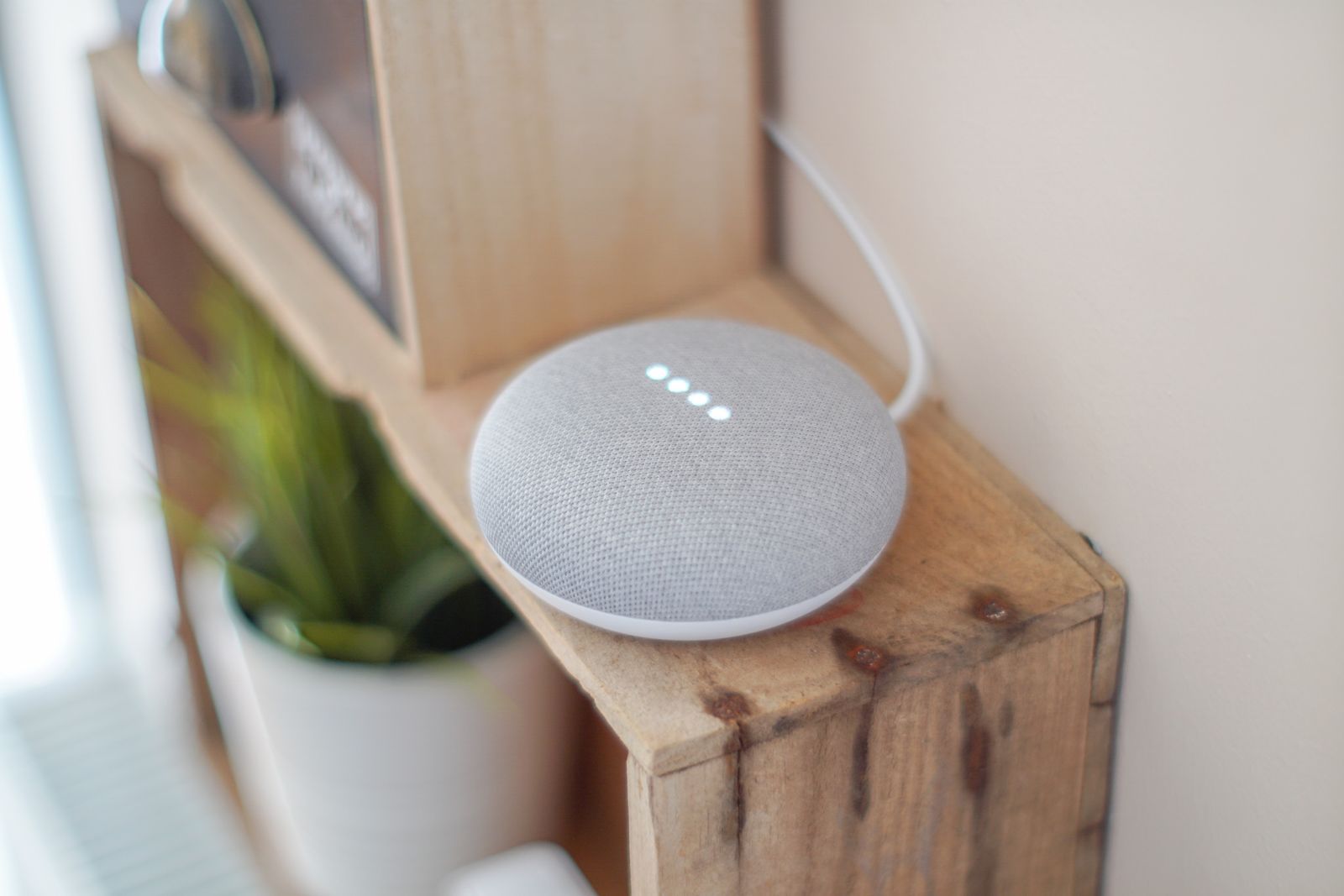
Amazon announced its new Echo range on 28 October 2026, and the headline is not the speaker: it is that the basic Echo Dot is now a real hub. Google cut its Gemini-powered Home Speaker to $79.99 on 2 November 2026, its first discount since launch, and the sale runs through 2 December. And Apple launches its first-ever smart home display, the HomeView, on Friday 13 November 2026 — $299, with a tabletop model that, in the words of one buying guide, suits renters because “nothing needs to go into a wall.”
For years, the renter’s answer to “do I need a smart home hub?” was a shrug. Hubs were an extra box, an extra cost, and an extra thing to explain to a landlord. That answer just changed. The hub is now inside the speaker or the display you were going to buy anyway — and it plugs in, sits on a counter, and moves with you when the lease ends.
This guide compares the three, on renter terms only: no drilling, no wiring, portable, and honest about the subscriptions hiding behind the price tag.
Prices below were seen on 11 November 2026. Black Friday prices move daily. Check the live price before you buy — and if a deal has ended, the pick is still the right one at full price.
In this guide
- The 3 renter rules (read before you buy a hub)
- Apple HomeView — best for Apple households
- Echo Dot (2026) — best value hub for renters
- Google Home Speaker — best Google hub, at its lowest price ever
- Quick comparison
- Which hub should you buy?
- The also-rans: Echo Show 16, HomePod mini 2 and Apple TV 4K
- Setting up your first hub in a rental (15 minutes)
- What a hub does not do
- Hub FAQ
- Sources & further reading
The 3 renter rules (read before you buy a hub)
Every hub in this guide passes three tests. If a hub fails any of them, it is not on this list, however good its reviews are.
- Plug-in only. No wiring, no wall mount, no electrician. The hub must work from a power socket on a counter, desk or nightstand.
- Portable. It must unplug, pack into a box and work in your next apartment with no reconfiguration beyond Wi-Fi. A hub that is screwed to a wall is a landlord’s fixture, not yours.
- No hidden monthly bill to do its basic job. A hub that needs a subscription to control your lights is not a hub — it is a rental. We flag every paywall below.
1. Apple HomeView — best for Apple households (launches 13 November 2026)

Apple HomeView (2026)
Price: $299 (tabletop or wall-mounted)
Apple HomeView is Apple’s first smart display: a 7-inch Liquid Retina touchscreen on a domed aluminium base, with an A18 chip, a 12MP Center Stage camera for FaceTime, built-in speakers and the new Siri AI. It recognises up to six people in the household by face, and each person gets their own Home Screen — their messages, calendar, reminders and Find My appear only when HomeView recognises them and their iPhone is nearby and recently unlocked. Guests can still control accessories, check the weather, set timers and play music without seeing anyone’s private content. It shows up to nine camera feeds at once, controls lights, locks, thermostats and blinds, and works as an Apple home hub.
The renter case is the tabletop model. It comes with a colour-matched 1.5 m USB-C cable and a 30W power adapter in the box, so it works out of the box on a kitchen counter, desk or nightstand — and the tabletop version is also the better music speaker, with a down-firing woofer and two force-cancelling passive radiators in the base. Four colours: silver, starlight, rose pink and space gray. The wall-mounted model costs the same $299 but needs a mount and power supply bought separately, plus a Schneider Home mount — it is the wrong model for a rental, and the extra hardware was not even available to order at the time of writing.
Three honest caveats. First, the price: $299 is a lot of money for a renter’s hub, and a one-person apartment with two smart bulbs does not need it. Second, setup needs an iPhone running iOS 27.2 or later, or an iPad on iPadOS 27.2 or later, plus Wi-Fi — if you are not already in Apple’s world, this is not your hub. Third, Siri AI is in beta and English-only at launch, and no independent hands-on review existed before launch day — the audio quality, Siri responsiveness and everyday usability are still unproven. HomeView is not sold in the European Union at launch, which does not affect US renters but tells you how new this product is.
2. Echo Dot (2026) — best value hub for renters
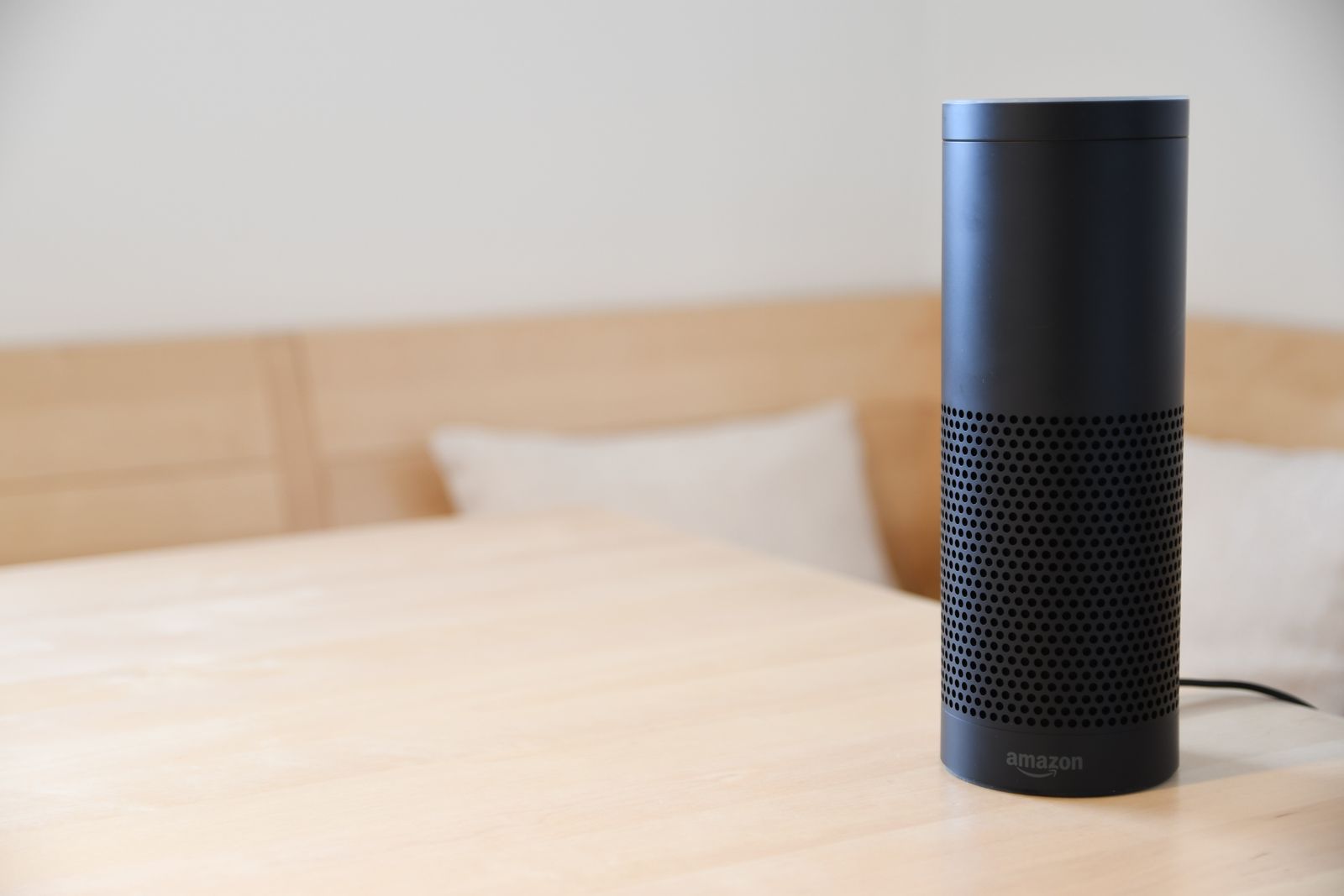
Echo Dot (2026)
Price: $99.99 ($109.99 for the Kids version)
This is the surprise of the three. Amazon’s October 2026 Echo Dot is the first basic Dot with a built-in smart home hub: Zigbee, Matter and Thread, with AZ3 silicon and a new AI Accelerator, and it is listed as a Thread 1.3 border router. In plain terms, one $100 device is now your speaker, your voice assistant (Alexa+) and your hub — the box that used to cost $100 on its own and sit next to the speaker. It also comes in a clock-screen variant, the Echo Time, and Amazon refreshed the Echo Studio and the Echo Show 16 alongside it.
For a renter, that matters more than any spec. A hub you had to buy, plug in, hide behind the TV and explain to your next landlord is now a small speaker on a shelf. It moves with you, it needs no drilling, and it speaks the three languages that matter in 2026: Matter over Wi-Fi, Matter over Thread, and Zigbee for the older sensors and bulbs that are still the cheapest on the market. No other $100 device in this guide does all three.
Two honest caveats. First, the price doubled: the old Echo Dot was a $50 speaker, and $99.99 is real money for a bedroom speaker — you are paying for the hub inside it, so buy it because you want a hub, not just a speaker. Second, Amazon’s approach to ads and privacy is the trade-off: the Echo Show 16 in the same range is designed to force sponsored adverts and promotional content on its display, and while the Dot has no screen to fill with ads, you are still buying into Amazon’s data model. If that bothers you, the Google or Apple options are the cleaner fit.
3. Google Home Speaker — best Google hub, at its lowest price ever
Google Home Speaker
Price: $79.99 (was $99.99, 20% off) — sale runs 2 November to 2 December 2026
Google’s Home Speaker launched on 27 June 2026, and until 2 November it had never been discounted. The current $79.99 price — live at the Google Store, Best Buy, Walmart and Target — is the first straight cash discount and the lowest price the speaker has ever had. It is a compact 3.4-inch speaker with 360-degree sound, built for Gemini for Home, and it doubles as a Matter hub with Thread border router support. It comes in four colours (Berry, Hazel, Jade and Porcelain), pairs with a second unit for stereo, and works with the Google TV Streamer for TV audio. At $79.99 it costs the same as an Echo Dot and gives you a much bigger speaker with Gemini built in.
For renters, the pitch is simple: it is the smallest, cheapest way into a Google smart home that will still work in your next apartment. Plug it in, join Wi-Fi, done. Two of them as a stereo pair cost under $160 — less than one HomeView — and they fill a living room properly. Best Buy is also offering it at 50% off with the purchase of selected Google TV models, if a TV upgrade is already on your list.
One honest caveat, and it is a real one: the newest Gemini features — real-time Gemini Live sessions — need a Google Home Premium subscription at $10 a month or $100 a year. Basic voice commands work without it, and every speaker includes a 30-day trial, but the headline AI feature is a subscription. That is the pattern to watch across all three hubs: the hardware price is only part of the cost.
Quick comparison
Recreated illustration — comparison data from this guide
| Hub | Price seen 11 Nov 2026 | Radios (hub) | Voice assistant | Monthly fee for the good stuff? | Renter verdict |
|---|---|---|---|---|---|
| Apple HomeView (tabletop) | $299 | Wi-Fi, Thread (Apple home hub) | Siri AI (beta, English-only) | No — but needs iPhone on iOS 27.2+ | Best shared screen for Apple households and roommates; expensive |
| Echo Dot (2026) | $99.99 | Zigbee, Matter, Thread 1.3 | Alexa+ | No hub fee; Amazon ads/privacy trade-off | Best value hub — the only one with Zigbee at this price |
| Google Home Speaker | $79.99 (was $99.99) | Matter, Thread | Gemini for Home | Gemini Live needs Google Home Premium $10/mo (30-day trial) | Best Google hub; lowest price ever, sale ends 2 Dec |
Prices were seen on 11 November 2026 and move daily — check the live price before you buy.
Which hub should you buy? (By the ecosystem you already have)
If you use iPhones and Apple Home: HomeView, if the $299 fits your budget — and only the tabletop model. If it doesn’t, the HomePod mini 2 ($149, shipping since 30 October 2026) is the same hub in a speaker, without the screen. Do not buy the wall-mounted HomeView for a rental.
If you use Alexa: the 2026 Echo Dot. It is the cheapest hub on this list, it is the only one with Zigbee, and it replaces two devices with one. If you already own an older Echo, check whether it is already a hub before buying a second one.
If you use Google Home: the Google Home Speaker at $79.99, before the sale ends on 2 December. Buy two for a stereo pair if your living room is the main listening room. Skip the Premium subscription until you have tried the 30-day trial and decided Gemini Live is worth $10 a month to you.
If you don’t know which ecosystem you’re in: buy a Matter device first, not a hub. A Matter plug or bulb (from $8–$13 for a WiZ bulb, $13.99 for a Kasa Smart Plug Mini, $19.99 for a Tapo P125M) works with Alexa, Google Home and Apple Home alike — and whichever hub you buy later will control it. Matter is the safe bet when you are unsure, and it is the reason all three hubs in this guide are worth buying: they all speak it.
The also-rans: what about the Echo Show 16, HomePod mini 2 and Apple TV 4K?
Three more devices launched in the same wave, and renters keep asking about them — so here is the short version.
Echo Show 16 ($499.99). A 16-inch smart display with Fire TV built in, a 13MP camera and Matter support, with VESA mounting holes. It is a lot of screen for a rental, a lot of money, and it is designed to force sponsored adverts and promotional content on the display. Skip it unless you specifically want a kitchen TV that is also a hub.
HomePod mini 2 ($149, shipping since 30 October 2026). Apple’s hub-speaker: Thread, Apple home hub, and it pairs with the new Apple TV 4K for surround sound. If HomeView is too expensive and too screen-shaped, this is the Apple renter’s hub. It does everything HomeView does except show you a screen.
Apple TV 4K (4th gen, $299, launches 13 November 2026). A19 chip, Siri AI, Thread, and a Siri Remote with Find My. It is a hub that is also your TV box — plug-in, no drilling — and it makes sense if you were already buying a streaming box. It does not make sense as a hub on its own.
And one more name to watch: the Apple Home Collection — a Matter lock, thermostats and sensors from LG and Schneider, plus four HomeKit cameras — starts selling in December in North America. The Matter lock story does not end with this launch week.
Setting up your first hub in a rental (15 minutes)
Recreated illustration — the six steps from this guide
- Pick the ecosystem, not the device. Look at your phone: iPhone means Apple, Pixel or Nest gear means Google, an Alexa app means Amazon. The hub follows the phone.
- Plug it in where you actually live. Kitchen counter, desk or nightstand — somewhere central, with Wi-Fi signal, and where you will see or hear it every day. Not behind the TV.
- Join Wi-Fi, then add one Matter device. A smart plug or bulb first. If it works in the app, the hub works. If it doesn’t, you have found the problem before you have bought anything else.
- Name your rooms. “Living room lamp” beats “Smart Bulb 3” when you are talking to it at midnight.
- Set one routine. Lights on at sunset, off at bedtime. A hub earns its keep on the first routine, not the fiftieth device.
- Keep the box. You will move. The hub goes back in its box, the next apartment gets the same setup in fifteen minutes, and nothing stays screwed to a wall.
What a hub does not do
A hub is not a security system, and it is not a substitute for the devices it controls. It will not stop package theft on its own — for that, see our Black Friday video doorbell guide — and it will not make a bad Wi-Fi network good. If your apartment Wi-Fi drops, your hub drops with it; fix the network first. And a hub does not remove the subscription question: cameras and doorbells still lock video history behind monthly plans, so check that cost before you buy the camera, not after.
Hub FAQ
Do I need a smart home hub in a rental?
Not always — but the answer changed in November 2026. The 2026 Echo Dot ($99.99), Google Home Speaker ($79.99), HomePod mini 2 ($149) and HomeView ($299) are all hubs, so if you buy any of them you already have one. If you only own Matter-over-Wi-Fi plugs and bulbs, you may never need a separate hub at all.
Is the Apple HomeView worth $299 for a renter?
For an Apple household with roommates, yes — six recognised faces on one shared screen is genuinely useful, and the tabletop model needs nothing in a wall. For a one-person apartment with two smart bulbs, no: buy the HomePod mini 2 ($149) or a Matter plug first.
Which is the cheapest smart home hub for renters?
The Google Home Speaker at $79.99 (sale ends 2 December 2026), followed by the 2026 Echo Dot at $99.99. Both are Matter + Thread hubs. The Echo Dot is the only one of the two with Zigbee.
Does the Echo Dot 2026 work with Apple Home?
Indirectly: Matter devices paired through the Echo Dot can be shared to Apple Home via Matter multi-admin, but the Dot itself is an Alexa device, not an Apple home hub. If you are all-in on Apple, buy the HomePod mini 2 or HomeView.
Do any of these hubs need a subscription?
The hubs themselves do not charge a monthly fee to control lights, plugs and locks. But the AI features do: Gemini Live needs Google Home Premium ($10/month, 30-day trial), and camera/doorbell video history needs a Ring, Blink or Nest plan. Check the subscription before you buy the accessory, not the hub.
Can I take my hub with me when I move?
Yes — that is the point. All three hubs in this guide plug in, sit on a surface, and unplug cleanly. Factory-reset it, pack it, and set it up on the next apartment’s Wi-Fi in about fifteen minutes.
Sources & further reading
Every price and claim in this guide is linked to its source below. Prices were seen on 11 November 2026 and move daily — check the current price before you buy.
- Matter Alpha — Amazon’s new Echo range (Matter, Thread and Zigbee) (2 November 2026)
- Smart Home Field Guide — The late-October 2026 smart home week (Echo hubs, Apple HomeView, Home Assistant 2026.10) (1 November 2026)
- MacRumors — Apple launching HomeView and Apple TV 4K on Friday 13 November (9 November 2026)
- There’s Mac — Apple HomeView buying guide ($299, tabletop vs wall-mounted) (updated 1 November 2026)
- AppleScoop — Apple HomeView pre-order guide
- 9to5Google — Google Home Speaker gets its first discount since June launch ($79.99, sale to 2 Dec) (3 November 2026)
- The Gadgeteer — Google Home Speaker drops to $79.99, its first real discount (3 November 2026, updated 10 November 2026)
- The Connected Haven — Apartment smart home guide (starter kit, landlord permission) (updated 1 November 2026)
- Photos: Pexels (free licence, no attribution required) — hero photo by John Tekeridis; nightstand photo by Valeri Mak; Echo speaker photo by Fabian Hurnaus. Each photo is labelled illustrative in its caption.